
How to recognize Stimming in your dog
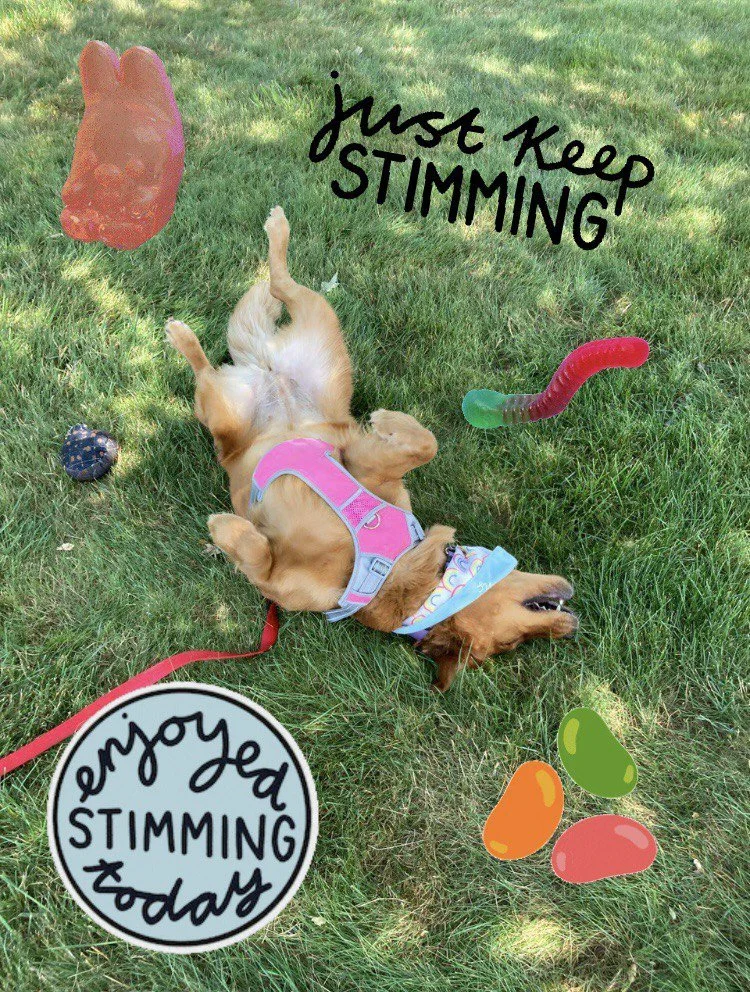
First, what is stimming in humans? You may have heard of it, but if not, let’s define it.
stimming
noun
stim·ming ˈsti-miŋ
: a self-stimulatory behavior that is marked by a repetitive action or movement of the body (such as repeatedly tapping on objects or the ears, snapping the fingers, blinking the eyes, rocking from side to side, or grunting) and is typically associated with certain conditions (such as autism spectrum disorder)
(thanks, Merriam-Webster!)
So we’ve defined what stimming might look like, but we haven’t really defined what it’s for, so I’ll tell you. Stimming is something all of us do, and it’s used for self-regulation. I myself have a myriad of stims; biting my nails, scratching my head and typing on a keyboard to name a few.
So, what does stimming look like in dogs, and how do we know when something is a stim, or a different type of behavior?
Well.. we know that all behavior is communication. Stimming, typically, is communicating an unmet need of some sort; whether it’s hunger, thirst, anxiety or frustration. Some dogs stim more than others, just like people. The key is making sure you recognize that your dog is asking for help, and that the behavior doesn’t become obsessive or destructive.
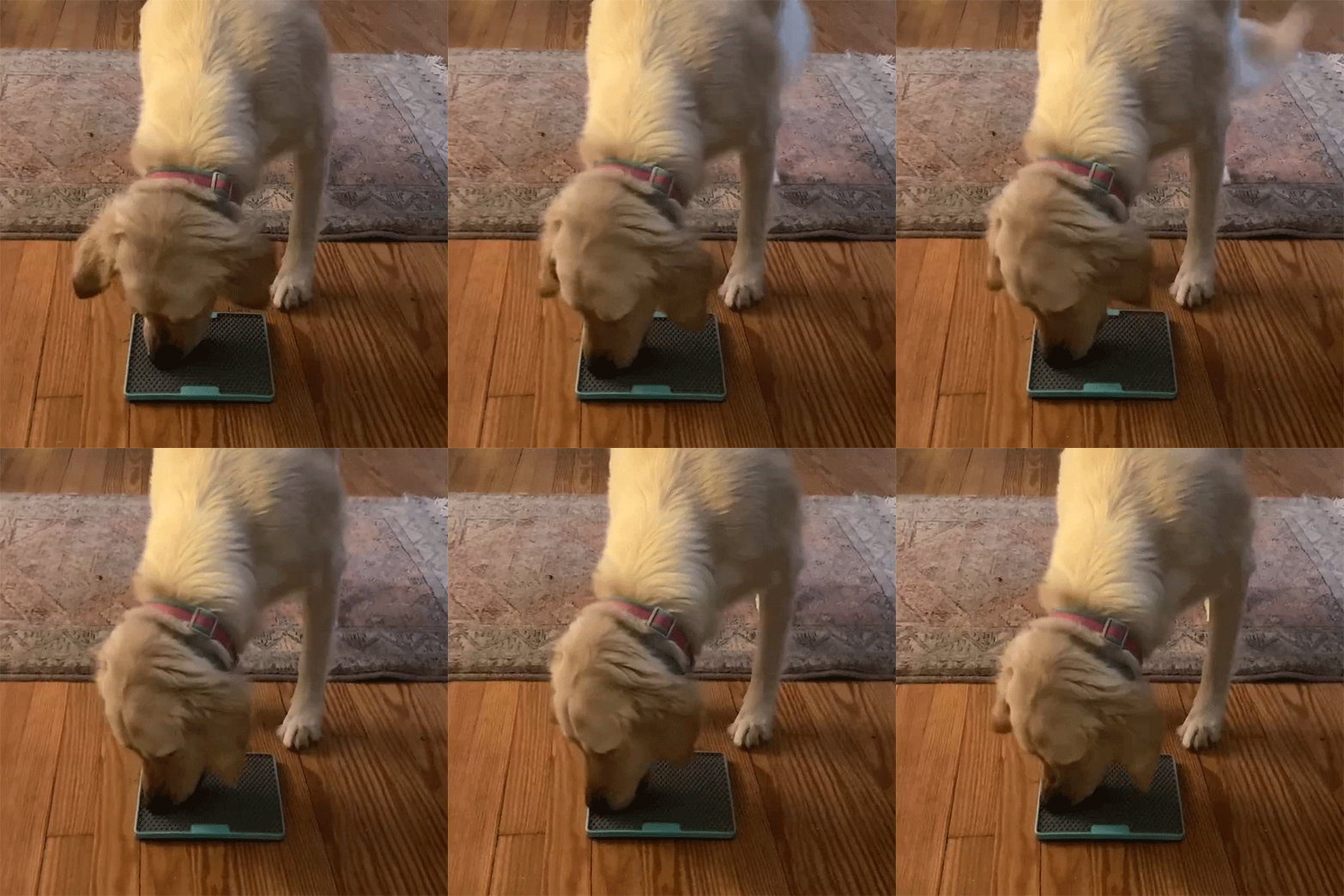
Take licking, for instance, a perfectly normal behavior on its own. Many dogs groom themselves or others to self-regulate. Some dogs, however, take it a bit too far. They will obsessively lick themselves or furniture, creating sores or bald spots.
The self-soothing has turned to self-harm, and the dog is definitely communicating that there is an unmet need that we need to figure out. We don’t want to limit their self-soothing, but we also don’t want the dog to hurt themselves. Plus, no one wants their dog to live in a state of anxiety.
One solution is a lickmat. A flat, silicone mat with hundreds of little massaging nubs, designed to soothe your dog and release happy chemicals as they consume delicious wet food off of it.
Incorporating this tool into your dog’s daily routine can be the difference between night and day.
So if a stim occurs because there’s an unmet need somewhere… would you ever want to stop or correct a stim?
The short answer is: No. This won’t solve the issue.
The long answer is: We are going to have to figure out what the unmet need is before we can get rid of the repetitive behavior. In the meantime, we can use redirection (like with the lickmat), pattern games and relaxation exercises to help calm your anxious dog.
Here are some common, normal dog behaviors that are often used for self-regulation:
Barking
Biting
Chewing
Shredding
Licking
Spinning
Rolling
Snuffling
Whining
Digging
Mounting
Shaking
None of these behaviors are inherently bad, but we must pay close attention to be sure the behavior isn’t obsessive or harmful. If you suspect your dog has an unhealthy coping technique, it may be time to consider hiring a Positive Reinforcement trainer.
Frankly Fun Dog Training plans are carefully designed for sensitive dogs that need extra love and attention. We only use Positive Reinforcement techniques that are approved by the American College of Veterinary Behaviorists.
Would you like to book a consultation with Allison for your dog? Fill out this form to get in touch!
♡°☆ (U❛ᴥ❛)♡(ᵔﻌᵔU) ☆°♡